
How to Fix Poor Sleep Quality: A 2026 Guide
Table of Contents
- Why Poor Sleep Quality Happens and What It Costs You
- Sleep Hygiene Best Practices That Actually Move the Needle
- How to Fall Asleep Faster When Your Brain Won't Shut Off
- Daytime Habits That Decide Your Night: Light, Movement, Caffeine, and Nicotine
- Natural Sleep Aids for Adults: What to Try Before Medication
- How to Measure Sleep Quality and Track Your Progress
- When Poor Sleep Quality Signals a Medical Problem
- Your 4-Week Plan to Fix Poor Sleep Quality
- Frequently Asked Questions
Last Updated: October 9, 2026
Why Poor Sleep Quality Happens and What It Costs You
Poor sleep quality is a pattern of sleep that leaves you unrefreshed, even when the hours add up.
The causes rarely come down to one thing. Stress, an inconsistent schedule, a bright or warm bedroom, late caffeine, and evening alcohol all chip away at rest.
The cost is real. Poor sleep quality drains daytime alertness, slows recovery, and makes everything from workouts to workdays harder.
Sleep Hygiene Best Practices That Actually Move the Needle
Sleep hygiene best practices are the daily habits and bedroom conditions that make restful sleep easier to reach. They work best in combination, not in isolation.
Set a Consistent Bedtime and Wake Time
A consistent wake time anchors your body clock more than any other single habit. Aim for the same wake time daily, weekends included, and let your bedtime follow naturally.
- Pick a wake time you can hold seven days a week
- Get bright light within the first hour of waking
- Move bedtime earlier in 15-minute steps, not one big jump
Build a Wind-Down Routine That Signals Sleep
A wind-down routine tells your brain the day is closing. Start 30 to 60 minutes before bed with low light, quiet activity, and no problem-solving.
Reading, gentle stretching, or a warm shower all work. The specifics matter less than the repetition. Do the same sequence nightly and your body starts anticipating sleep.
Fix the Bedroom Environment: Dark, Quiet, Cool
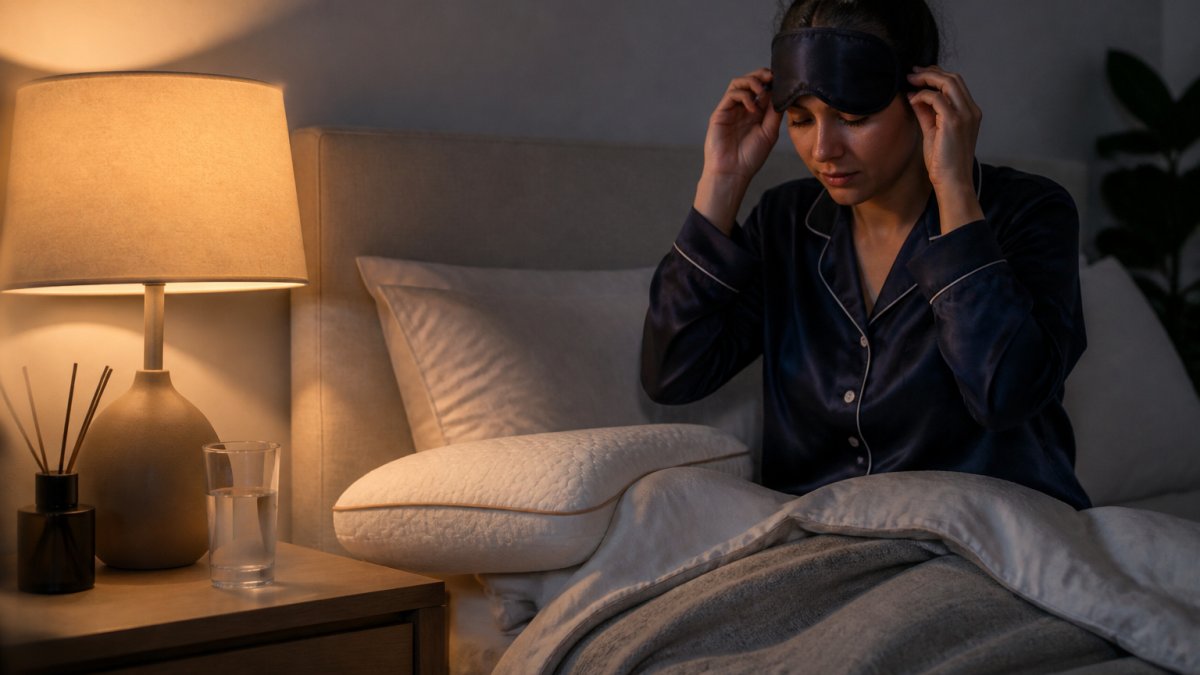
The bedroom environment should be dark, quiet, and cool. Light suppresses melatonin, noise fragments sleep even when you don't fully wake, and a warm room makes it harder to fall asleep.
A blackout eye mask like the Bagby NIGHT Sleep Mask helps create that darker environment at home or while traveling. Pair it with a breathable, adjustable pillow such as the Adjustable Bamboo Cooling Pillow to keep your head cool and supported through the night.


How to Fall Asleep Faster When Your Brain Won't Shut Off
The fastest way to fall asleep faster is to stop trying so hard. Sleep latency, the time it takes to drift off, stretches out when you lie awake monitoring the clock. But "stop trying" is easier said than done, and the fix depends on which pattern you're stuck in. Here are three common patterns and what actually helps each one.
Pattern 1: You Can't Fall Asleep (Racing Mind, 30+ Minutes Awake)
This is the classic "tired but wired" pattern. Your body is ready; your brain is still processing the day. The problem is usually cognitive arousal, not sleep drive.
What helps:
- Get out of bed after roughly 20 minutes. Move to another room, keep the lights low, and do something boring, fold laundry, read a dull book, until you feel drowsy. Then return. This breaks the link between your bed and frustration, which is the core mechanism behind cognitive behavioral therapy for insomnia (CBT-I).
- Do a "brain dump." Write down everything on your mind, tomorrow's tasks, worries, half-finished thoughts, on paper. Externalizing them tells your brain it doesn't need to keep rehearsing.
- Try a longer exhale. Breathe in for four counts, out for six, for a few minutes. The extended exhale nudges your nervous system toward rest. Keep your phone out of reach.
Pattern 2: You Fall Asleep Fine but Wake in the Middle of the Night
Middle-of-the-night waking is often a trigger problem, not a falling-asleep problem. Something is pulling you out of a sleep cycle, and your job is to find it.
Common triggers, roughly in order of frequency:
- Alcohol. It knocks you out, then wakes you a few hours later as it metabolizes. If you drink, keep it earlier in the evening and modest.
- Room temperature. Core temperature keeps dropping through the night; a room that felt fine at 11 p.m. can feel warm at 3 a.m.
- Blood sugar swings. A heavy or sugary late meal can cause a dip that wakes you.
What helps: keep a two-week log of when you wake and what was different that night. Patterns emerge fast. If you wake and can't get back within 20 minutes, apply the same get-out-of-bed rule.
Pattern 3: You Wake Too Early and Can't Go Back
Early-morning waking, say, 4 or 5 a.m., is the hardest pattern to fix with habits alone. It's strongly associated with depression, anxiety, and chronic stress, and it can also be a side effect of alcohol or certain medications.
What helps:
- Don't fight it in bed. Lying awake and frustrated reinforces the pattern. Get up, keep lights low, and do something calm until your normal wake time.
- Protect your wake time. Resist the urge to nap or sleep in to "make up" for it, that shifts your clock and makes the next night worse.
- Talk to a clinician if it persists. Early waking that lasts more than a few weeks, especially with low mood, is worth a professional conversation. CBT-I is the first-line treatment for chronic insomnia, and it's more effective than sleep aids for most people.
The One Rule That Applies to All Three
If you're not asleep after roughly 20 minutes, get up. Move to another room, keep the lights low, and do something boring until you feel drowsy. Then return to bed. This single habit, called stimulus control, is the most evidence-supported behavioral change for insomnia, and it works across all three patterns.
Quick Self-Check
| Your pattern | First thing to try | If it doesn't help in 2 weeks |
|---|---|---|
| Can't fall asleep | Brain dump + get out of bed after 20 min | Consider CBT-I |
| Wake in the middle of the night | Log triggers; cut alcohol and late meals | Check for sleep apnea |
| Wake too early | Protect wake time; don't nap | Talk to a clinician about mood and meds |
The point isn't to find the perfect technique. It's to match the technique to your pattern, change one thing at a time, and give it two weeks before judging.
Daytime Habits That Decide Your Night: Light, Movement, Caffeine, and Nicotine
What you do between breakfast and dinner shapes how well you sleep. Light exposure, physical activity, and stimulant timing are the three levers most adults underuse.
Bagby NIGHT Sleep Mask – Comfortable Light-Blocking Eye Mask for Sleep →
Get Daylight Exposure Early and Move Your Body
Daylight exposure in the morning sets your circadian rhythm for the whole day. Aim for 10 to 30 minutes of outdoor light shortly after waking, even on cloudy days.
Regular physical activity deepens sleep, but timing matters. Finish intense workouts at least a few hours before bed. A gentle walk or yoga in the evening is fine and often helps.
Cut Caffeine, Nicotine, and Alcohol Where They Hurt Sleep Most
Caffeine has a long half-life, so an afternoon coffee can still be active at midnight. Set a cutoff around early afternoon and hold it.
- Caffeine: stop by early afternoon
- Nicotine: it's a stimulant and fragments sleep, so evening use is the worst timing
- Alcohol: it knocks you out, then wakes you a few hours later as it metabolizes
Alcohol is the most misunderstood. Many people use it to fall asleep faster, then wonder why they wake at 3 a.m. If you drink, keep it earlier in the evening and modest.
Natural Sleep Aids for Adults: What to Try Before Medication
Natural sleep aids for adults are worth trying before prescription options, especially when the problem is habit-driven rather than medical.
Start with the basics: a dark room, a cool temperature, and a consistent schedule. Melatonin can help shift timing for jet lag or schedule changes, but it isn't a long-term fix for poor sleep quality. Magnesium and chamomile have modest support and few downsides for most people.
A calming bedside light can also help. The Nicebeam Sleep Recovery Lamp is designed for short daily sessions and can fit into a wind-down routine. If you're already tracking recovery with a wearable, a discreet option like the Smart Ring Fitness Tracker keeps sleep and activity data without a bulky watch.

How to Measure Sleep Quality and Track Your Progress
Sleep quality is best measured by how you feel and function, backed by a few simple numbers. Tracking turns vague frustration into a clear pattern you can act on.
| What to Track | How to Measure | Why It Matters |
|---|---|---|
| Sleep latency | Minutes to fall asleep | Shows how well your wind-down works |
| Nighttime awakenings | Count per night | Reveals light, noise, or alcohol triggers |
| Total sleep duration | Hours asleep | Confirms you're getting enough |
| Daytime alertness | Rate 1-5 each afternoon | The truest test of sleep quality |
| Consistency | Bed and wake time spread | Measures circadian stability |
A wearable or sleep ring can log latency and awakenings automatically, which is far easier than guessing. Review the data weekly, not nightly. One bad night means nothing; a two-week trend tells you what to change.
When Poor Sleep Quality Signals a Medical Problem
Poor sleep quality sometimes points to a condition that habits alone won't fix. Talk to a clinician if symptoms persist despite good sleep hygiene.
Watch for these signs:
- Loud snoring, gasping, or pauses in breathing
- Falling asleep during the day despite enough time in bed
- Persistent insomnia lasting more than a few weeks
These can indicate sleep apnea, chronic insomnia, or another treatable disorder. Evidence-based options include cognitive behavioral therapy for insomnia, which is the first-line treatment for chronic insomnia, along with medical evaluation and, when appropriate, other therapies.
Your 4-Week Plan to Fix Poor Sleep Quality
Here's how to sequence the changes so you're not overhauling everything at once.
Week 1: Anchor the schedule. Set one wake time, get morning daylight, and cut caffeine after early afternoon.
Week 2: Fix the environment. Darken the room, cool it down, and add a wind-down routine.
Week 4: Troubleshoot and refine. Review your data, adjust what isn't working, and see a clinician if nothing has improved.
Frequently Asked Questions
What are the signs of poor sleep quality?
Signs include taking more than 30 minutes to fall asleep, waking up several times during the night, waking too early and not returning to sleep, and feeling tired despite spending seven or more hours in bed. Daytime effects like low alertness, irritability, and relying on caffeine to function are also common. Tracking your sleep latency, nighttime awakenings, and how rested you feel each morning gives you a clearer picture than a single night's experience.
How long does it take to fix a broken sleep schedule?
Most people notice meaningful improvement within two to four weeks of consistent sleep hygiene best practices. The first week usually brings easier mornings and faster sleep onset, while the circadian rhythm takes longer to fully reset. Shifting your bedtime by 15 to 30 minutes every few days is more effective than a sudden jump. If you work night shifts or travel often, allow extra time and keep your wake time fixed even on weekends.
Why do I feel tired but can't fall asleep?
Feeling exhausted yet wired usually means your sleep drive and your body clock are out of sync. Common causes include late caffeine, evening screen time and blue light, stress that keeps your nervous system activated, and an irregular schedule. Try moving your last coffee to before 2 p.m., dimming lights two hours before bed, and using a wind-down routine like reading or gentle breathing. If it persists for weeks, talk to a doctor about screening for sleep disorders.
Do natural sleep aids for adults actually work?
Some do, and the evidence varies by option. Light-blocking eye masks and a cool, quiet bedroom reliably support restful sleep because they remove the triggers that cause nighttime awakenings. A bright light lamp used earlier in the day can help reset your body clock. If you already track sleep with a wearable, a smart ring or sleep monitor can show whether a change is working. Always check with a clinician before adding supplements, especially if you take medication.