
Sustainable Weight Loss for Busy Professionals
Table of Contents
- Why Sustainable Weight Loss Beats Crash Dieting for Busy Professionals
- Set a Realistic Weight-Loss Pace and Calorie Target
- Weight Loss Meal Prep for Busy Professionals: The 90-Minute Sunday System
- Quick Healthy Meals for Weight Loss When You Have 15 Minutes
- Short Workouts for Weight Loss That Fit a Packed Calendar
- How to Stop Stress Eating at Work
- Track Progress Beyond the Scale (and Travel Without Derailing)
- Frequently Asked Questions
Last Updated: October 18, 2026
Why Sustainable Weight Loss Beats Crash Dieting for Busy Professionals
Sustainable weight loss is losing weight at a pace and through habits you can keep for years, not weeks.
People do not fail from lack of willpower. They fail because the plan was built for someone with two free hours a day.
Here is the core tension. The CDC's guidance on healthy weight loss points toward gradual, steady loss as the safer and more lasting approach.
So the goal is not the fastest drop.
Set a Realistic Weight-Loss Pace and Calorie Target
A realistic pace is roughly half a pound to one pound per week for most adults, from a moderate calorie reduction (often a 500-calorie daily gap) plus daily movement.
Slow loss is the only kind most people can maintain while working. Faster loss usually means cutting so much that hunger takes over by week three.
Use this simple starting framework:
- Estimate your maintenance calories with an online calculator, then subtract 300 to 500 per day.
- Never drop below about 1,200 calories per day without medical guidance.
- Aim for 0.5 to 1 pound of loss per week, and accept slower weeks.
- Check in after two to three weeks and adjust by 100 to 200 calories if the scale has not moved.
That last point matters. The NIH's resources on weight management are a good starting place for a conversation with your doctor.
Weight Loss Meal Prep for Busy Professionals: The 90-Minute Sunday System
Weight loss meal prep for busy professionals works best as one focused 90-minute weekly session. Cook two proteins, one grain, and a tray of vegetables, then portion into containers for five weekday lunches and a base for fast dinners.
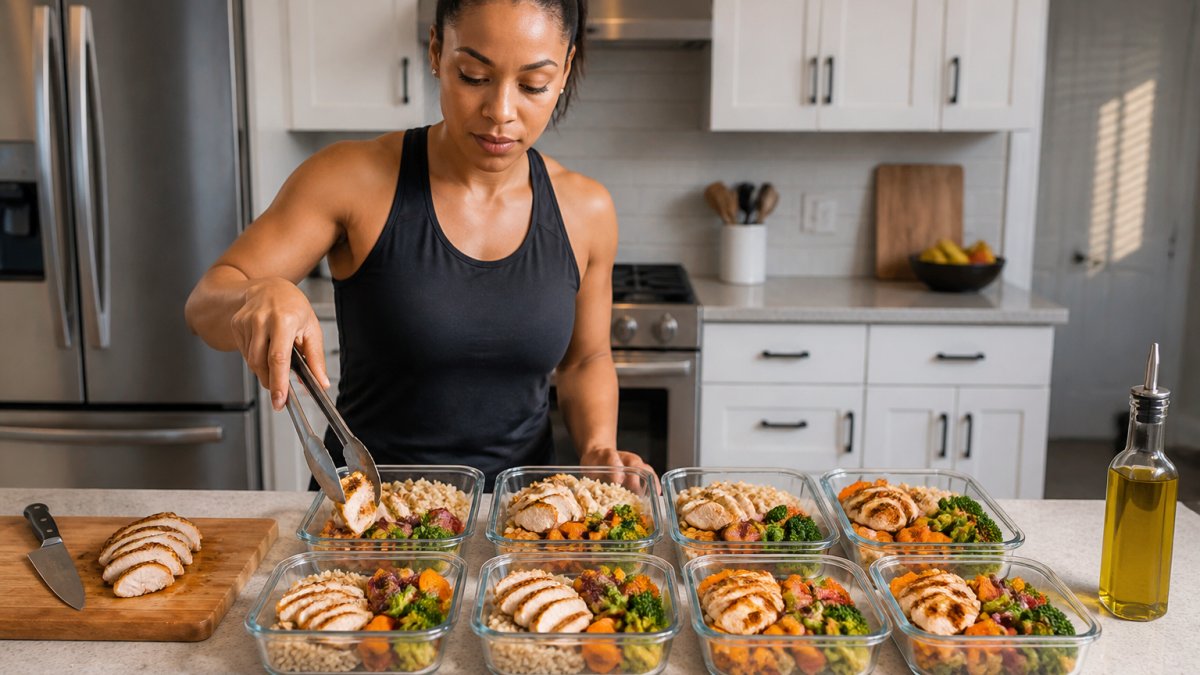
Here is the order that keeps the session under 90 minutes:
- Start the oven first. Tray of chicken thighs or salmon, tray of chopped vegetables, both in at once.
- Cook one grain on the stove while the oven runs. Brown rice, quinoa, or farro.
- Prep a no-cook protein. Greek yogurt, cottage cheese, or canned tuna.
- Portion into five containers as each item finishes.
- Store dressing and sauces separately so nothing turns soggy.
Build Every Container Around Protein, Fiber, and Healthy Fat
Every container should follow the same formula: a palm of lean protein, a fist of fiber-rich vegetables or complex carbohydrates, and a thumb of healthy fats. That keeps you full for hours and protects muscle while you lose fat.
Good proteins include chicken, fish, eggs, Greek yogurt, tofu, and beans. For fiber, load up on vegetables, berries, and whole grains. Healthy fats come from olive oil, nuts, seeds, and avocado.
Quick Healthy Meals for Weight Loss When You Have 15 Minutes
Quick healthy meals for weight loss are built on assembly, not cooking. In 15 minutes you can put together a balanced plate without a recipe.
Try these on a busy weeknight:
- Sheet-pan leftovers bowl: prepped protein, prepped vegetables, a scoop of grain, hot sauce.
- Egg scramble: three eggs, a handful of spinach, half an avocado.
- Loaded Greek yogurt: plain yogurt, berries, almonds, a drizzle of honey.
- Tuna and white bean salad: canned tuna, white beans, olive oil, lemon, greens.
The rule is simple: protein first, vegetables second, starch last. That order keeps portions in check without counting every bite.
Short Workouts for Weight Loss That Fit a Packed Calendar
Short workouts for weight loss work when they are scheduled like meetings. Ten to twenty minutes of strength training or brisk cardio, done consistently, beats an hour at the gym you never attend.
Build a week around this:
Home Fitness Electric Treadmill for Walking, Jogging & Running →
- Two strength sessions using bodyweight moves or dumbbells.
- Two brisk walks or short cardio sessions.
- One stretch or mobility day.
- Daily movement like stairs, walking calls, and standing breaks.
At energizehealthco, our home fitness range is built for exactly this kind of schedule. A physical activity guideline from the CDC recommends regular movement across the week, and short sessions count toward it.
A Sample Week of 10-Minute Workouts
| Day | Workout | Time |
|---|---|---|
| Monday | Dumbbell squats, rows, presses | 10 min |
| Tuesday | Brisk walk or treadmill incline | 15 min |
| Wednesday | Bodyweight circuit: push-ups, lunges, planks | 10 min |
| Thursday | Walk plus stretching | 15 min |
| Friday | Dumbbell full-body circuit | 10 min |
| Saturday | Longer walk or light cardio | 20 min |
| Sunday | Rest or gentle mobility | 10 min |
For strength days, a set of solid dumbbells is enough. Our Pure Steel Electroplated Dumbbells handle presses, rows, and lunges, so one pair covers the whole circuit. On rainy days, our Home Fitness Electric Treadmill turns a 15-minute walk into a done deal. And if you track steps and sleep, our Fitness Activity Tracker logs daily movement and sleep quality in one place.


How to Stop Stress Eating at Work
Stress eating at work is usually a response to tension, boredom, or exhaustion, not real hunger. The fix is to change the moment, not just the snack.
Start by naming the trigger: the 3 p.m. energy dip, a difficult email, a long meeting. Keep a two-week note on your phone: time, what happened just before, what you reached for, and how hungry you actually were on a 1-to-5 scale.
Match the Strategy to the Workplace Situation
Generic advice fails because the workplace sets the trap. Here is how to handle the situations that derail people:
- Catered meetings and conference rooms. The food is free, visible, and boring, which is exactly when people eat past fullness. Sit away from the food table, fill one plate once, and treat the meeting as a meal rather than a grazing window. If the spread is all pastries and soda, eat a protein-forward snack beforehand so you arrive steady.
- The 3 p.m. vending-machine run. This is usually a blood-sugar and fatigue problem, not a character problem. A lunch with protein and fiber, plus a planned afternoon snack (Greek yogurt, nuts, cheese, or a protein bar), removes most of the urge. Keep the snack in your desk drawer so the decision is already made.
- Desk-side grazing. Eating lunch at your keyboard makes meals register as background noise, so you feel hungry an hour later. Eat lunch away from your desk when you can, even for ten minutes, so the meal counts.
- Late nights and deadlines. Exhaustion raises hunger and cravings the next day. Protect sleep where you can, and keep a protein-forward fallback at your desk so a late night does not turn into a drive-through.
Try these swaps:
- Drink a full glass of water first. Thirst often masquerades as hunger.
- Take a five-minute walk before you open the snack drawer.
- Keep protein-forward snacks like nuts, Greek yogurt, or cheese on hand.
- Protect sleep. Poor sleep raises hunger and cravings the next day.
Sleep quality is the lever most people ignore. Our curated sleep aids and wearables can support better rest, which can make the next day's choices easier. A rested brain reaches for the apple. A tired one reaches for the vending machine.
Track Progress Beyond the Scale (and Travel Without Derailing)
Progress tracking beyond the scale gives you a fuller picture. Weight fluctuates with water, salt, and hormones, so a single number can mislead you.
Track these instead:
- Energy levels across the workday.
- Sleep quality and how rested you feel.
- Waist measurement once every two weeks, at the same spot and time of day.
- Strength or step counts trending up.
A simple weekly check-in takes five minutes: note your weight two to three times that week, your waist measurement every other week, your average step count, and one sentence on energy. Judge the trend over a month, not a day.
Travel and Workplace Scenarios That Derail Progress
Business travel is where most routines break, because the environment changes faster than habits can adapt. The goal is not perfection but damage control, with a plan for each situation.
- Airports. Walk the terminal instead of riding the moving walkway, and pack a protein-forward snack (nuts, a protein bar, or jerky) so you are not choosing between a cinnamon roll and a pretzel at the gate. Buy a large water bottle after security and sip it through the flight.
- Restaurant meals. Order protein and vegetables first, ask for sauces and dressings on the side, and treat bread or chips as optional rather than automatic. You do not need to count calories to keep a meal reasonable, the protein-first order does most of the work.
- Hotel rooms and gyms. Pack a resistance band or use bodyweight moves for a 10-minute session. A short walk before breakfast or after meetings counts. If the hotel gym is crowded or closed, a hallway walk and a bodyweight circuit are enough to keep the streak alive.
- Long commutes. Use part of the commute for movement where it is safe and practical, a walk to a farther stop, stairs instead of the elevator, or a standing break before you sit down at your desk.
When you travel for work, keep three rules: walk when you can, pick protein and vegetables at every meal, and keep one short movement session in the day.
Frequently Asked Questions
How can busy professionals lose weight sustainably?
Aim for a moderate calorie deficit of about 500 calories below your maintenance level, which supports roughly 1 to 2 pounds of loss per week. Pair that with a protein-forward meal prep routine, 10-minute workouts you can repeat on workdays, and a plan for stress eating at work. Sustainable weight loss comes from small consistent changes you can keep during busy weeks, not from restrictive diets you abandon after a month.
How much exercise do I need for sustainable weight loss?
Federal physical activity guidelines call for at least 150 minutes of moderate-intensity activity per week, plus two sessions of strength training. That breaks down to about 30 minutes on five days, or five 10-minute workouts on workdays plus a longer weekend session. Short workouts for weight loss work when they are consistent, so pick movements you will actually do, such as brisk walking on a treadmill or a dumbbell circuit at home.
How long does sustainable weight loss usually take?
At a pace of 1 to 2 pounds per week, 20 pounds takes roughly 10 to 20 weeks. Busy professionals often see slower weeks around travel, deadlines, and holidays, which is normal. Track trends over a month rather than day to day, and use waist measurements, energy levels, and sleep quality alongside the scale. A pace you can maintain for six months beats a fast drop you regain.
How can I stay consistent with weight loss while traveling for work?
Pack protein-forward snacks such as nuts, jerky, and protein bars, and choose hotel rooms with a mini-fridge so you can keep yogurt and fruit on hand. At restaurants, order grilled protein with vegetables and ask for dressings and sauces on the side. Walk the airport terminal instead of sitting at the gate, and use a fitness tracker to keep your daily movement visible. Consistency while traveling comes from a few default choices, not perfect planning.