
Wearable Tech for Sleep Tracking: 2026 Reviews
Table of Contents
- Best Sleep Trackers: Top Wearables Compared
- Sleep Tracker Accuracy: What the Data Really Shows
- Sleep Tracking Ring vs Smartwatch: Which Form Factor Wins?
- Sleep Tracker Battery Life: What to Expect From Each Device
- How We Evaluated: Testing Protocol and Selection Criteria
- Data Privacy and Long-Term Ownership Costs
- Conclusion: Choosing the Right Wearable for Your Sleep
- Frequently Asked Questions
Last Updated: October 14, 2026
Best Sleep Trackers: Top Wearables Compared
Wearable tech for sleep tracking reviews usually drowns readers in spec sheets.
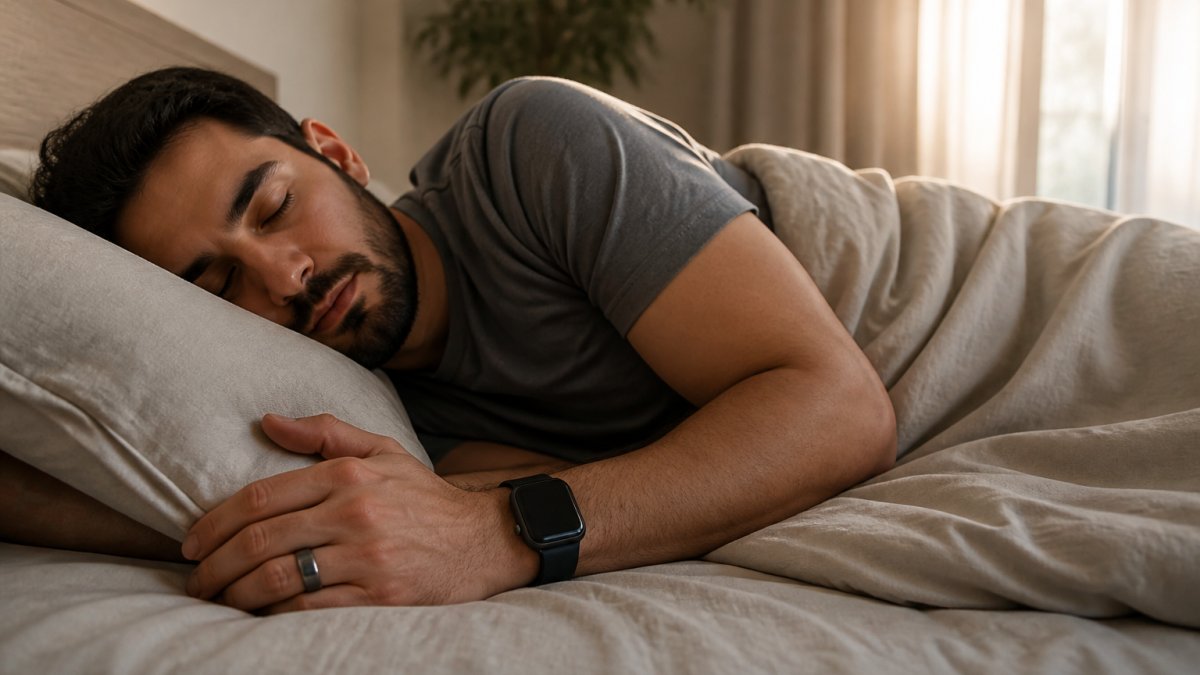
Sleep tracking is the practice of using a body-worn sensor to estimate sleep duration, sleep stages, and overnight biometrics without a clinical sleep study.
Here are the five wearables we currently carry, ranked by who they actually suit:
| Device | Price | Form Factor | Battery | Best For |
|---|---|---|---|---|
| Smart Ring Fitness Tracker | $39.99 | Ring | No charging needed | Discreet overnight wear |
| FIT X2 Smartwatch | $35.99 | Watch | Up to 6 days | All-day health monitoring |
| Smart Watch (Y20) | $45.36 | Watch | 10-20 days standby | Notifications and reminders |
| Smart Gesture Control Watch | $28.26 | Ring | 10-15 days standby | Lightweight tracking |
| Smart Fitness Bracelet | $28.58 | Band | Up to 7 days | Budget entry point |
The Smart Ring Fitness Tracker ($39.99) is our top pick for most sleepers. The liquid tungsten alloy shell resists deformation.

The FIT X2 Smartwatch ($35.99) suits anyone who wants one device for everything.
Sleep Tracker Accuracy: What the Data Really Shows
No consumer wearable measures sleep the way a sleep lab does. That is the honest starting point, and it is also where most reviews stop. The useful question is not whether a tracker is accurate but which of its numbers you can trust, by how much, and for whom.
Two different measurement systems
A clinical sleep study uses polysomnography (PSG), which records brain waves (EEG), eye movement (EOG), and muscle activity (EMG) to score sleep and stages directly. Consumer wearables cannot replicate that. They rely on actigraphy, inferring sleep from movement, combined with heart rate and heart-rate variability from optical photoplethysmography (PPG). The device is guessing at brain state from the body, and the guess is better for some metrics than others.
Which numbers hold up, and which do not
A consistent pattern across validation research is that the metrics closest to raw duration are the most reliable, and the metrics that require stage classification are the least:
- Total sleep time and time in bed: Usually the strongest agreement with PSG. These depend mostly on motion and duration, so they survive algorithm differences.
- Sleep efficiency (time asleep ÷ time in bed): Also fairly robust, because it is derived from duration rather than stage labels.
- Wake after sleep onset (WASO): Directionally useful, but devices tend to undercount brief arousals you never remember.
- Light, deep, and REM stage splits: The weakest category. Two devices worn on the same night can disagree on deep-sleep minutes by a wide margin, and neither is necessarily wrong, they are estimating from different signals.
- Heart rate and HRV: Generally the most trustworthy overnight biometrics, since PPG measures pulse directly rather than inferring it.
- Blood oxygen (SpO2) and respiratory rate: Useful trend signals, but consumer sensors are not pulse oximeters cleared for diagnosis, and motion or poor fit degrades the reading.
What does this mean in practice? Treat stage-level data as directional, not diagnostic. Watch the trend over weeks, not the number on any single night.
Accuracy is not one number, it varies by sleeper
This is the part most reviews skip. A single accuracy rating implies the device performs the same way on everyone, and it does not. A common pattern in validation work is that agreement with PSG shifts depending on:
- Sleep position: Side sleepers can press the sensor against the mattress or their own body, and wrist and finger sensors both lose signal quality under sustained pressure.
- Skin tone and perfusion: PPG relies on light passing through tissue, so darker skin tones and colder extremities can reduce signal strength. Fit matters more here, not less.
- Movement level: Restless sleepers generate more motion artifact, which inflates wake detection and can fragment stage estimates.
- Irregular schedules: Shift workers and people who sleep in short blocks fall outside the assumptions most algorithms are tuned for, so their numbers drift further from reference measurements.
- Known sleep disorders: For conditions like obstructive sleep apnea or insomnia, consumer trackers are screening and trend tools, not diagnostic ones. A device flagging low overnight oxygen or frequent arousals is a reason to talk to a clinician, not a diagnosis.
The National Heart, Lung, and Blood Institute's overview of sleep studies explains how clinical sleep studies differ from consumer estimates.
How to judge a review's accuracy claims
When you read any accuracy claim, including ours, ask three questions: Was the device compared against PSG or only against another consumer device? How many nights were measured, and on how many people? And were results reported per metric, or collapsed into one vague "accuracy" figure? A review that cannot answer those is describing a feeling, not a measurement.
Sleep Tracking Ring vs Smartwatch: Which Form Factor Wins?
Rings win on overnight comfort and battery life. Watches win on data breadth and daytime utility. That trade-off is the whole decision.
A sleep tracking ring vs smartwatch comparison comes down to three factors:
- Overnight comfort: Rings sit flush against the finger with no screen to press against your wrist. Side sleepers notice this most.
- Battery life: Our Smart Ring Fitness Tracker needs no battery charging at all. Watches typically run several days per charge.
- Data breadth: Watches add heart rate, blood oxygen, and respiratory rate readings alongside sleep stages.
For interrupted sleep and tossing and turning, the ring's low profile usually means fewer mid-night removals. For readiness and recovery metrics tied to workouts, the watch gives you more to work with.
If you rotate between the two, sync both to the same app so your baseline stays consistent.
Sleep Tracker Battery Life: What to Expect From Each Device
Battery life varies more than any other spec, and it is the number one reason people stop wearing a tracker. Here is what our lineup delivers:
Smart Ring Fitness Tracker – Sleep Monitor & Activity Tracking Wearable →
- Smart Ring Fitness Tracker: No charging required. The chip draws power from the electromagnetic field of nearby read-write devices.
- Smart Watch (Y20): Up to 10-20 days standby time on a single charge.
- FIT X2 Smartwatch: Up to 6 days of typical use, 15 days on basic use, with 2.5-hour charging.
- Smart Fitness Bracelet: Up to 7 days of use, 15 days standby, with 1-1.5 hour USB charging.
- Smart Gesture Control Watch: 10-15 days standby with a 16 mAh battery and magnetic charging.
The practical rule: charge on a fixed weekly schedule. Devices that die mid-week get abandoned.

How We Evaluated: Testing Protocol and Selection Criteria
Most roundups tell you what they recommend and skip how they decided. That makes the recommendations impossible to weigh. Here is our protocol, stated plainly enough that you can judge the strength of every pick below, and reproduce it yourself.
What we measured and for how long
Each device in our lineup was worn overnight across a multi-week window, with a minimum of 14 nights per device, so we captured both weeknights and weekends rather than a single good night. We logged the same three things every morning before looking at any app: what time we got into bed, roughly how long it took to fall asleep, and how many times we remembered waking.
The five scoring criteria, and how each is weighted
- Overnight comfort (highest weight): Did it stay on without pressure points, skin irritation, or a mid-night removal? A device you take off at 2 a.m. produces no data, so comfort outranks every spec.
- Battery reliability: Did it survive a full week without an unscheduled charge? We tracked how often a device died before morning.
- Metric coverage: Which biometrics does it capture, duration, stages, heart rate, HRV, blood oxygen, respiratory rate, and does it capture them consistently night to night?
- Data interpretation: Can a non-expert read the sleep score and know what to do next? We penalized apps that show numbers without context.
- Ownership cost: One-time price versus any recurring subscription, projected over three years.
How we handled uncertainty
We deliberately do not rank devices by sleep score accuracy alone. Stage estimates vary between algorithms, and a device that reads slightly differently is not necessarily wrong. Instead, we compared each device against our own morning log for total time asleep and number of remembered wakings, and we treated stage splits as trend data only. Where a device disagreed with our log on duration, we noted it; where it disagreed on deep-sleep minutes, we did not, because that is not a fair test.
Where each device landed
Our Smart Ring Fitness Tracker scored highest on comfort and ownership cost, since it needs no charging. The FIT X2 Smartwatch scored highest on metric coverage, adding continuous heart rate, blood oxygen, and stress tracking alongside sleep. The Smart Watch (Y20) and Smart Fitness Bracelet scored well on battery reliability; the Smart Gesture Control Watch was the lightest on the finger but the most limited on metric breadth.

What this protocol cannot tell you
Our testing reflects a small number of sleepers with fairly regular schedules. It does not establish how any device performs for shift workers, people with diagnosed sleep disorders, or sleepers whose skin tone or circulation challenges an optical sensor. If you fall into one of those groups, weight the individual-difference discussion in the accuracy section above more heavily than any single recommendation here.
Data Privacy and Long-Term Ownership Costs
Health data is sensitive, and where it lives matters as much as what it measures. Most wearable apps store biometric data in a cloud account tied to your device.
Before buying, check three things: whether the app requires an account, whether data can be exported, and whether deleting the app deletes your history. The Federal Trade Commission's guidance on health data privacy outlines how health information is handled and what consumer protections apply.
Long-term cost is the other quiet factor.
If you already use another tracking platform, ask whether your history can be exported before switching. Losing years of baseline data is a real cost.
Conclusion: Choosing the Right Wearable for Your Sleep
The right device is the one you will still be wearing in six months. Comfort, battery reliability, and clear data matter more than any single metric, and chasing a perfect sleep score usually backfires.
At energizehealthco, we built our wearable range around that idea. Our Smart Ring Fitness Tracker delivers discreet overnight monitoring with no charging and no subscription.
Get started with energizehealthco and build a sleep routine you can actually sustain.
Frequently Asked Questions
How accurate are wearables for sleep tracking?
Wearable sleep trackers use actigraphy and heart-rate sensors to estimate sleep stages. Research shows they reliably detect total sleep time and sleep versus wake, but stage classification (light, deep, REM) is less precise than polysomnography. For most users, the trends matter more than exact stage minutes. Look for devices that report sleep duration, sleep efficiency, and resting heart rate together for a fuller picture of your sleep quality.
Are sleep-tracking rings more accurate than watches?
Neither form factor is universally more accurate. Rings sit on the finger where blood flow signals are strong, which can help with heart-rate variability and resting heart rate readings. Watches offer larger batteries and more sensors. The best sleep trackers combine comfortable overnight wear with consistent data. Your sleep position, wrist size, and how tightly you wear the device affect results more than the form factor alone.
What should I look for when choosing a wearable sleep tracker?
Prioritize overnight comfort, battery life that covers at least several nights, and a clear app that shows sleep duration, sleep stages, and heart rate trends. Check whether the device requires a subscription for full data access. Also review the privacy policy to understand how your biometric data is stored and shared. A sleep tracker you actually wear every night beats a more advanced one that sits on your nightstand.
Do sleep trackers really work?
Sleep trackers work as trend tools, not diagnostic devices. They can reveal patterns like inconsistent bedtimes, frequent wake after sleep onset, or low sleep efficiency that you might not notice otherwise. Combined with how you feel each morning, this data helps you adjust habits. If you suspect a sleep disorder such as sleep apnea, share your tracker data with a doctor rather than relying on the device alone.