
Best Recovery Gear for Athletes 2026: Top Tools for Recovery
Table of Contents
- Best Recovery Gear for Athletes in 2026: What Actually Works
- Quick Comparison: Recovery Gear by Category and Price
- Best Muscle Recovery Tools for Soreness and Tightness
- Massage Guns for Athletes: Do They Help?
- Compression Boots for Recovery: What to Know Before Buying
- Recovery Tools for Home Workouts: Small Spaces, Real Results
- Cold, Heat, and Light Therapy: Temperature-Based Recovery
- How to Choose Recovery Gear by Sport, Budget, and Training Load
- Frequently Asked Questions
Last Updated: October 12, 2026
Best Recovery Gear for Athletes in 2026: What Actually Works
Recovery gear is equipment designed to speed muscle repair, reduce soreness, and restore range of motion after training. The best recovery gear for athletes in 2026 is not the longest list of gadgets.
Here is the uncomfortable truth most roundups skip.
The fundamentals are unglamorous: sleep, protein, hydration, and easy movement on rest days. The extras are the tools below. Used well, they support the fundamentals. Used as a substitute, they waste money.
Below, we break recovery gear into categories, explain what each type actually does, and show you how to build a kit that fits your budget and your sport.
Quick Comparison: Recovery Gear by Category and Price
The table below groups the main recovery categories by what they do and what you should expect to pay.
| Category | What It Does | Typical Price Range | Best For |
|---|---|---|---|
| Foam rollers | Self-myofascial release, mobility | $20-$70 | Daily maintenance, tight quads and calves |
| Massage sticks | Pinpoint soft-tissue massage | $20-$60 | Hard-to-reach areas, travel |
| Percussion massagers | Rapid pulses into muscle tissue | $80-$400 | Pre-workout activation, post-workout tightness |
| Compression boots | Sequential pressure for circulation | $200-$1,000 | Legs after long or heavy sessions |
| Compression sleeves | Constant pressure, portable | $30-$120 | Travel, work, low-impact swelling |
| Cold therapy | Reduced inflammation, pain relief | $15-$500 | Acute flare-ups, post-competition |
| Heat therapy | Muscle relaxation, comfort | $20-$200 | Chronic tightness, pre-session prep |
| Sports tape and support | Joint stability, proprioception | $10-$60 | Injury prevention, return to training |
Best Muscle Recovery Tools for Soreness and Tightness
The best muscle recovery tools are the ones you will use consistently, not the ones with the most features. For most athletes, that means a foam roller for broad areas and a handheld tool for spots the roller cannot reach.
This is the category where the gap between marketing and reality is widest. A tool does not need to vibrate, connect to an app, or cost three figures to help. It needs to apply pressure to soft tissue in a way you can repeat.
Foam Rollers and Self-Myofascial Release
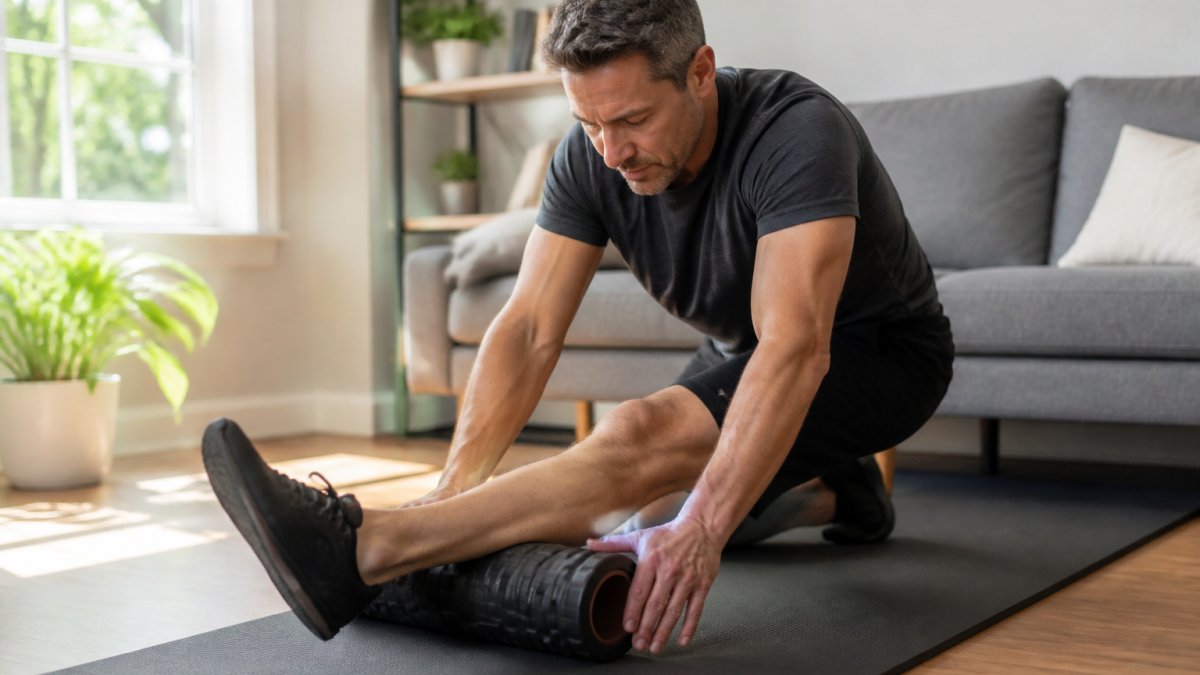
Self-myofascial release is the practice of applying sustained pressure to muscle and connective tissue to reduce tightness and improve range of motion. A foam roller is the most common tool for it.
How to use one well:
- Roll slowly, about one inch per second, not fast back and forth
- Pause on tender spots for 20-30 seconds until the sensation eases
- Spend 5-10 minutes total, focusing on quads, calves, glutes, and upper back
- Breathe normally; tensing up defeats the purpose
A common mistake is rolling directly over a joint or the lower back. Neither responds well to compression. Roll the muscle, not the bone.
For floor work, a mat matters more than people expect. Our Maji Sports 2 Tone Premium TPE Yoga Mat ($44.99) offers cushioned support for knees, elbows, and wrists during rolling and stretching, with a non-slip textured surface.

Massage Sticks and Handheld Tools
Massage sticks are lightweight, portable, and excellent for calves, hamstrings, and forearms. They are the tool most athletes underuse because they seem too simple to matter.
The advantage is control. You can adjust pressure instantly and target a specific knot without contorting yourself on the floor. Keep one in your gym bag and use it for two minutes per muscle group after training.
For hip and glute work, resistance bands pair well with a stick. Our XGear Fitness Set of 3 Womens Butt and Hip Exercise Bands ($24.99) includes light, medium, and heavy resistance levels, color-coded for quick selection, and packs into a travel bag.
Massage Guns for Athletes: Do They Help?
Massage guns for athletes can help with short-term muscle tightness and pre-workout activation, but they are not a cure for soreness. They feel good, and feeling good has real value, but do not expect them to replace sleep or nutrition.
What they do well:
- Wake up a muscle before training with 30-60 seconds of light pulses
- Loosen a stubborn area after a session
- Reach the upper back and shoulders without a partner
What they do not do:
- Repair muscle damage
- Prevent injury on their own
- Substitute for a proper warm-up
Compression Boots for Recovery: What to Know Before Buying
Compression boots for recovery apply sequential air pressure up the leg to support circulation and reduce swelling. They are the most expensive item in most recovery kits, and the one with the clearest use case: legs that feel heavy after long or repeated sessions.
They are also the least portable. Most units need a power outlet, and the boots themselves take up real space. If you travel constantly, a sleeve may serve you better.
What to look for:
Nicebeam Sleep Recovery Lamp – Relaxing Bedtime & Wellness Light →
- Enough pressure range to feel firm without pinching
- A session length you will actually complete, often 20-30 minutes
- Washable liners, because these get used on bare skin
Compression Sleeves and Portable Options
Compression sleeves provide constant, gentle pressure rather than pulsing cycles. They are cheap, silent, and wearable during travel or at a desk.
The trade-off is obvious. Sleeves do not deliver the same circulation boost as boots, but they are the only compression option you can wear on a plane. For athletes managing mild swelling or stiffness, that convenience often wins.
| Option | Pressure Type | Portability | Best For |
|---|---|---|---|
| Compression boots | Sequential, cycling | Low, needs power | Post-session leg recovery at home |
| Compression sleeves | Constant, static | High, wearable | Travel, work, mild swelling |
Recovery Tools for Home Workouts: Small Spaces, Real Results
Recovery tools for home workouts should earn their footprint. In a small space, every item competes with everything else, so favor tools that fold, stack, or hang.
Our Folding Yoga Mat ($93.62) is built for exactly this constraint.

A vibration plate is the other space-friendly option worth knowing. Our Vibration Plate Exercise Machine ($101.74) offers 120 adjustable speed levels and 9 preset programs, with a 300-pound weight capacity and noise-reducing operation for apartment use.
Cold, Heat, and Light Therapy: Temperature-Based Recovery
Temperature-based recovery splits into two camps. Cold therapy is for acute, inflamed, or painful areas in the first day or two after an injury or a brutal session. Heat therapy is for chronic tightness and relaxation. Using the wrong one at the wrong time can make things worse.
- Cold therapy: ice packs, cold plunges, and contrast baths. Best in the first 24-48 hours after acute stress. Helps with pain relief and inflammation.
- Heat therapy: heating pads, warm baths, and saunas. Best for ongoing muscle tightness and pre-session relaxation. Avoid on fresh injuries or swollen areas.
- Light therapy: red and infrared light devices used for short daily sessions.
Our Nicebeam Sleep Recovery Lamp ($179.00) is a red light therapy lamp with a stand, designed for 10-15 minute at-home sessions. The listing describes it as supporting a brighter look, daily recovery, and comfort after long days or demanding workouts, with an adjustable stand that positions the lamp at the face, neck, or back.

How to Choose Recovery Gear by Sport, Budget, and Training Load
Choosing recovery gear comes down to three questions: what your sport demands, how much you train, and what you will realistically use. Answer those honestly and the shopping list writes itself.
Match the tool to the demand:
- Runners and cyclists: legs take the load. Prioritize a foam roller, compression boots or sleeves, and cold therapy for flare-ups.
- Lifters and CrossFit athletes: broad muscle tightness. A percussion massager and massage stick cover most needs.
- Yoga and Pilates practitioners: mobility and joint comfort. A quality mat, resistance bands, and heat therapy fit best.
- Racquet and team sports: stop-start demands. Sports tape and supports for joints, plus a roller for calves and hips.
Then match the tool to your budget. A complete starter kit does not need to be expensive. Our Smart Ring Fitness Tracker ($39.99) tracks daily activity and sleep patterns in a discreet ring. If you prefer a wrist display, our 0.96-Inch Fitness Activity Tracker ($87.98) records steps, calories, heart rate, and sleep, with a 25-day standby time and IP67 water resistance.
Safety, Contraindications, and When to See a Doctor
Recovery tools are not risk-free, and some people should not use certain types without medical clearance.
Talk to a clinician before using compression, cold, or heat therapy if you have:
- Circulatory problems, including poor blood flow in the legs
- Blood clotting disorders or a history of clots
- Diabetes with reduced sensation in the feet or legs
- An open wound, recent fracture, or active infection
- Heart conditions where temperature extremes are a concern
Stop using any device and seek medical advice if you notice numbness, tingling, unusual bruising, sharp pain, or swelling that gets worse rather than better.
The FDA's guidance on medical devices explains how at-home wellness devices are classified, which helps you understand what a device is and is not cleared to do. For general physical activity guidance, the CDC's physical activity recommendations outlines how much movement adults need each week. And the National Institutes of Health's MedlinePlus resource on sports injuries covers when a strain or sprain needs professional care.
Recovery is not a product you buy once. At energizehealthco, we curate fitness and wellness essentials that support physical fitness, recovery, and sleep quality, from wearable trackers that show your progress to sleep aids and recovery devices that fit a home routine.
Frequently Asked Questions
What recovery gear do athletes actually need?
Most athletes benefit from a few core items: a foam roller or massage stick for self-myofascial release, a percussion massager for targeted muscle relief, and compression gear for circulation. For home workouts, a foldable yoga mat or vibration plate can support recovery sessions. Start with one or two tools that match your sport and training load, then add more as your routine grows. The best recovery gear is what you will use consistently.
Are massage guns worth it for athletes?
Massage guns can help with muscle soreness and tightness by delivering rapid percussive pulses to soft tissue. They are convenient for post-workout use and targeting hard-to-reach areas. However, they are not a cure-all. Use them as part of a broader recovery routine that includes sleep, hydration, and mobility work. If you have an injury or chronic pain, check with a healthcare provider before using one.
Do compression boots help with athletic recovery?
Compression boots use air pressure to massage your legs and may help improve blood circulation and reduce perceived soreness after training. Many athletes find them relaxing and useful for recovery time. They are not essential, but they can be a valuable addition if you train hard and want a hands-free recovery option. Look for adjustable pressure settings and a size that fits your legs properly.
What is the best recovery equipment for home use?
For home use, focus on tools that are portable, quiet, and easy to store. A vibration plate like the one from energizehealthco offers muscle relaxation and post-workout recovery in a compact design. Resistance bands and a foldable yoga mat are also great for mobility and stretching. If space is tight, a massage stick or smart ring for sleep tracking can help without taking up much room.
How should athletes use a foam roller after a workout?
Wait 30 to 60 minutes after intense training, then roll slowly over tight areas like quads, hamstrings, and calves. Spend 30 to 60 seconds per muscle group, breathing steadily. Avoid rolling directly over joints or injured areas. Pair foam rolling with light stretching and hydration. If you have a medical condition or recent injury, consult a healthcare provider before starting.